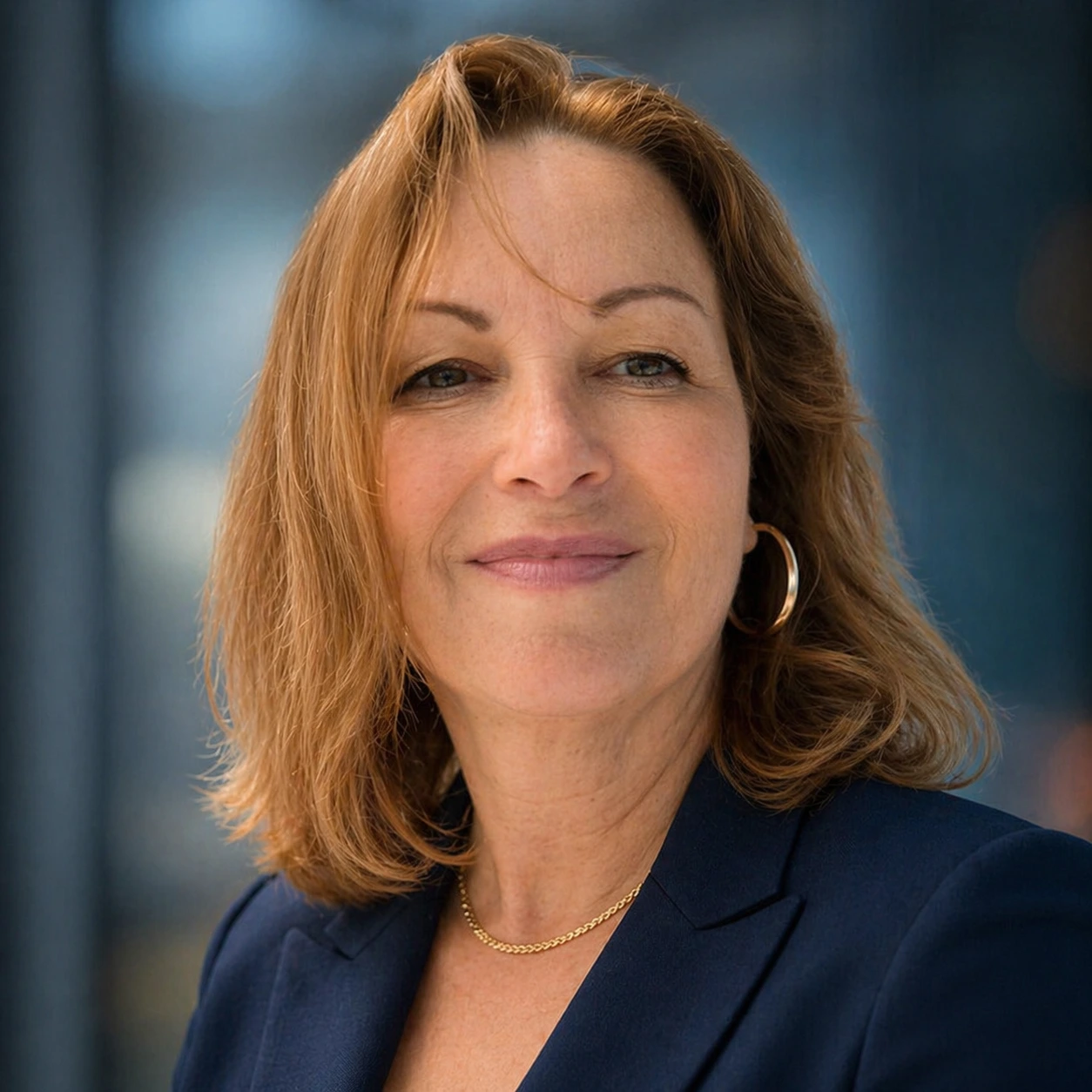
Dr. Olena Mykhailenko
Principal Researcher
Research Fellow, Hanse-Wissenschaftskolleg, Germany (2026-27)
 ORCID
ORCID
 ResearchGate
Olena Mykhailenko works at the frontier where artificial intelligence reshapes culture, economies, and the conditions of social continuity. Her research challenges dominant narratives of AI as a tool for productivity, showing instead how it becomes infrastructure for maintaining work, meaning, and cultural life under pressure. Drawing on economics, sociology, and cultural studies, she develops new conceptual frameworks to understand how people adapt to AI in contexts where stability cannot be assumed.
Focusing on crisis-affected environments, she examines how cultural workers and educators use AI to sustain professional practices, navigate institutional breakdowns, and preserve cultural and cognitive infrastructures. By introducing concepts such as digital survivance, her work reframes human–machine collaboration as a site of resilience, resistance, and transformation—contributing to new ways of thinking about regional development, cultural economies, and the future of work in an era defined less by optimization than by the struggle for continuity.
Normalno Under Fire: Human–LLM Partnerships To Stabilize Educators' Daily Rhythms In Wartime Ukraine
Olena Mykhailenko
Todd J. B. Blayone
How do asymmetries in human–LLM interaction stabilize or destabilize the educational activity of Ukrainian higher educators during wartime?
The project operates within a larger two-level methodological structure: a computational level (a pipeline called ScholarFlow-LDP, built by collaborator Todd) and an interpretive level (Olena's discourse-analytic work). The two levels share asymmetry as a central construct but operationalize it differently — computational signals in Todd's pipeline, structural discourse-analytic domains in Olena's framework. The data are LLM logs of Ukrainian higher education professionals from 2022 to 2025.
The working hypothesis is that asymmetries between Ukrainian higher educators and LLMs are not incidental but constitutive of their interaction. Wartime conditions intensify and recompose these asymmetries across temporal, epistemic, stakes, repair, emotional, and agentive domains. The same asymmetric structures may both stabilize educational activity — through scaffolding and continuity — and destabilize it — through rupture, dependency, or erosion of professional authority. How this balance unfolds depends on how educators navigate the linguistic, cultural, and political conditions that shape their agency in dialogue with the machine.
Optimism, interest and gender equality: comparing attitudes of university students in Latvia and Ukraine toward IT learning and work
Compare: A Journal of Comparative and International Education, 52(6), 895–913, 2020
This study captured a generation's mindset just before artificial intelligence redrew the boundaries of technical work. A thousand students in Latvia and Ukraine were asked how they felt about information technology—whether it inspired optimism, anxiety, or genuine curiosity, and how those feelings intersected with gender and equality. The patterns are strikingly relevant today.
Using digital technologies for Indigenous sociocultural advancement in an era of AI: A systematic critical synthesis
Preservation, Digital Technology & Culture (Online First), 2025
This paper examines how digital technologies are mobilized in Indigenous advancement projects and asks a functional question: what are these projects doing, and to what end? Using systematic review methods and critical synthesis, the study analyzes initiatives ranging from digital heritage archives to language revitalization platforms.
Exploring technology attitudes and personal–cultural orientations as student readiness factors for digitalised work
Higher Education, Skills and Work-Based Learning, 11(3), 2020
Across Eastern Europe, digitalisation arrives not as a uniform tide but as a cultural negotiation. In Latvia and Ukraine, young professionals grow up amid competing habits of hierarchy, risk, and autonomy. The research follows these undercurrents, tracing how optimism, anxiety, and learning interest toward technology intertwine with inherited cultural codes.